
Transform Your Yard with a Living Barrier: The Smart Guide to DIY Privacy Fence Installation
Ever stared enviously at your neighbor’s lush, green wall of privacy, only to wish you could achieve the same serene, secluded backyard oasis without the hefty contractor bill? You’re not alone. More homeowners are turning to DIY privacy fence installation using living plants—a beautiful, eco-friendly, and cost-effective alternative to traditional wood or vinyl. This comprehensive guide will walk you through every phase of creating a stunning natural barrier, from planning to mature growth. Forget noisy, hot metal or stark wood; a living fence cools your space, cleans the air, and becomes a dynamic part of your landscape. By mastering the core privacy fence installation steps, you invest in decades of beauty, wildlife habitat, and genuine seclusion. Let’s dig in and build your green sanctuary from the ground up.
Materials & Supplies
A successful living fence starts with the right botanical building blocks. Here’s your complete checklist:
Plant Selection (Choose 1-2 species for uniformity):
- Arborvitae (Thuja occidentalis): Fast-growing (1-3 ft/year), classic pyramidal shape. ‘Green Giant’ is a popular, drought-tolerant hybrid.
- Leyland Cypress: Extremely rapid growth (3-4 ft/year), dense foliage. Requires more water and pruning.
- Holly (Ilex spp.): Evergreen with glossy leaves and winter berries. Slower growing but very dense.
- Privet (Ligustrum spp.): Deciduous or semi-evergreen, extremely hardy and fast. Can be invasive in some regions—check local guidelines.
- Boxwood (Buxus spp.): Slow-growing, perfect for formal, manicured hedges. Very shade-tolerant.
Tools & Soil Amendments:
- Essential Tools: Shovel (round-point), garden rake, tape measure, string line & stakes, pruning shears/loppers, garden hose, wheelbarrow, gloves.
- Soil Prep: Compost or well-rotted manure (to enrich native soil), optional mulch (shredded bark or wood chips). DIY Privacy Fence Installation
- Installation Aids: Landscape fabric (weed barrier), drip irrigation kit or soaker hose, tree stakes & flexible ties (for young plants).
Optional Alternatives:
- For very poor soil, consider raised bed planting with a 50/50 native soil/compost mix.
- In extreme climates, using larger container-grown plants (5-gallon pots or bigger) gives a significant head start over small bare-root seedlings.
- A “double-row” staggered planting (plants offset in two rows 18″ apart) creates a denser screen faster than a single row. DIY Privacy Fence Installation
Timing / Growing Schedule
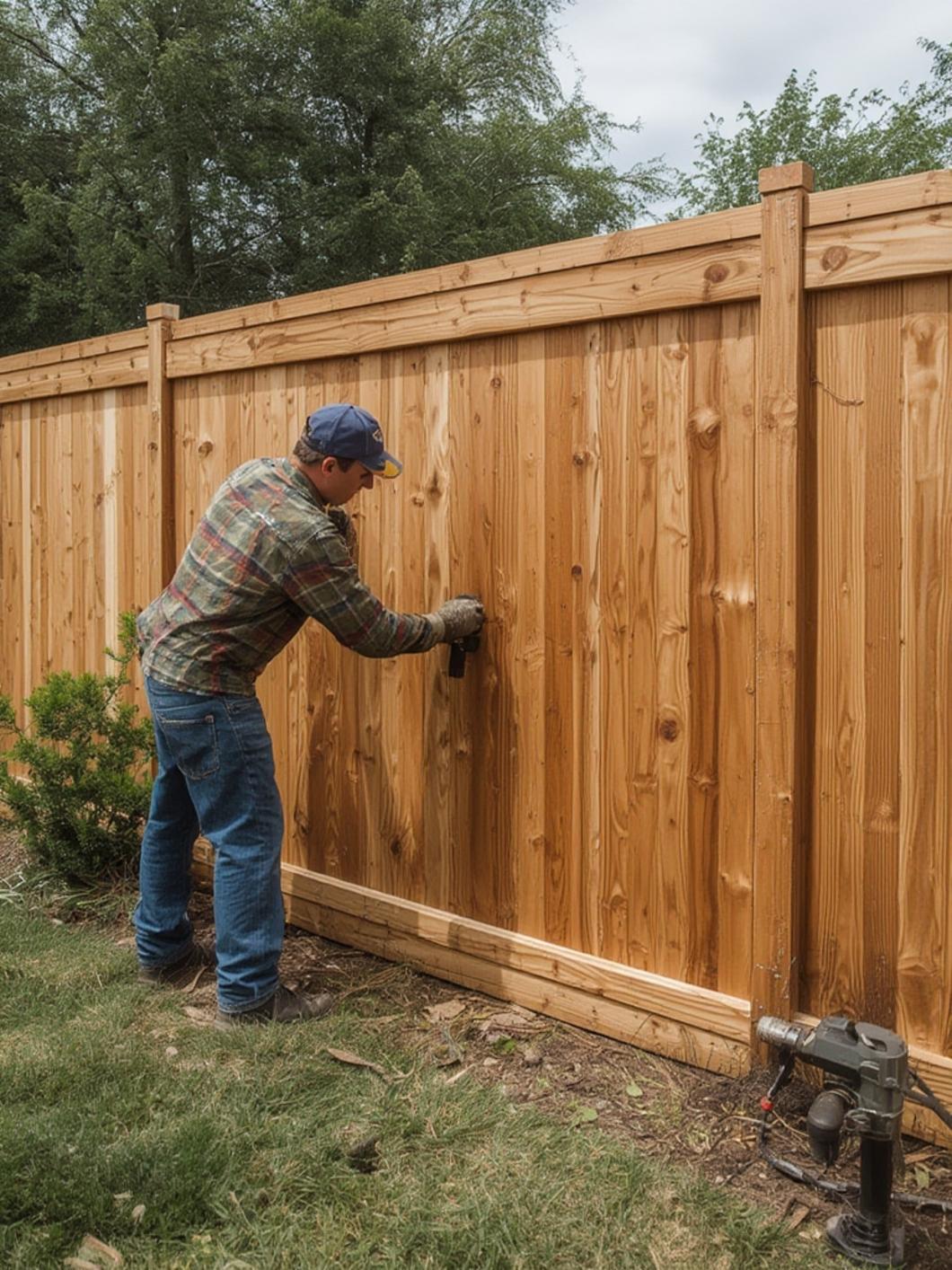
Patience is the most critical material for this project. Your timeline is a marathon, not a sprint.
- Prep Time (Early Spring or Fall): 1-3 weekends. This includes site selection, measuring, staking the line, soil amendment, and planting. Cool seasons reduce plant stress.
- Establishment Period (Years 1-3): This is the active growth and care phase. Water deeply 2-3 times per week during the first two growing seasons, more in drought. Expect 1-3 feet of new growth annually depending on species and care. DIY Privacy Fence Installation
- Expected Results & Maturity:
* Year 1: Plants focus on root establishment. Minimal visual privacy. You’ll see a “green line” but not a solid wall.
* Year 2-3: Noticeable densification and height gain. Privacy improves significantly but may have gaps.
* Year 3-5: For a truly effective DIY privacy fence installation, most fast-growing species will provide a solid, continuous screen from 6-12 feet tall, depending on the variety. Slow-growers like Boxwood may take 5-7 years for full privacy but offer impeccable structure. Think of it like compounding interest—the care you give early pays exponential privacy dividends later. DIY Privacy Fence Installation
Step-by-Step Instructions
Follow these privacy fence installation steps meticulously for optimal plant health and uniform growth.
1. Plan & Mark: Determine your fence line. Consider sun exposure (most need 6+ hours). Use a string line and stakes to mark the exact row. For a dense screen, space plants 3-5 feet apart on-center (check specific plant tags).
2. Prep the Trench: Dig a continuous trench 2-3 times wider than the root ball and as deep as the pot. Loosen the sides. This allows roots to expand easily into the native soil. DIY Privacy Fence Installation
3. Amend & Plant: Mix compost into the backfill soil (roughly 1 part compost to 2 parts native soil). Place the plant in the trench, ensuring the top of the root ball is level with or slightly above the surrounding soil. Backfill gently, tamping to remove air pockets. Critical: Do not bury the root flare (where trunk meets roots).
4. Water & Mulch: Deeply water each plant to settle soil. Apply a 2-3 inch layer of shredded bark mulch in a wide circle around the plant (keep mulch 3 inches away from the trunk to prevent rot). This conserves moisture and suppresses weeds.
5. Irrigate & Stake: Install a drip line or soaker hose along the row. Water consistently. Stake only if necessary in windy areas, using loose ties that allow some trunk movement to strengthen the plant.
6. First Pruning: Lightly tip-prune (snip the very ends of new growth) after the first full growing season. This encourages lateral branching, creating a denser base from the start.
Nutritional Benefits / Advantages
A living fence is more than a pretty barrier; it’s a working ecosystem.
- Air Quality: Plants absorb CO2, ozone, and particulate matter, acting as a natural air filter for your home.
- Noise & Wind Buffer: A dense hedge can reduce traffic noise by 6-10 decibels and deflect harsh winds, lowering heating/cooling costs.
- Biodiversity Hotspot: Provides critical habitat and food (berries, seeds) for birds, pollinators, and beneficial insects.
- Soil Health: Deep root systems prevent erosion, improve soil structure, and support microbial life.
- Mental Wellness: The biophilic effect of greenery reduces stress and enhances your connection to nature, directly benefiting your household’s well-being.
Tips, Alternative Methods, or Gardening Advice
- For Small Spaces: Use columnar varieties like ‘Skyrocket’ Juniper or ‘Degroot’s Spire’ Arborvitae that grow tall but stay narrow (3-4 ft wide).
- Container Gardening: While challenging for large screens, you can create a “container hedge” using long, rectangular planters with dwarf evergreens. Requires more frequent watering and feeding.
- Organic Only: Skip chemical fertilizers. Use compost tea annually and compost mulch. Neem oil or insecticidal soap can tackle pests like bagworms if caught early.
Climate Considerations: In Zone 5-9, arborvitae and holly excel. For colder climates (Zone 3-4), try dwarf Korean boxwood or Canadian hemlock. In the deep South, consider wax myrtle (Morella cerifera*), a fast-growing, native evergreen.
- Accelerate Privacy: The “double-row staggered” method mentioned earlier is the best pro tip for filling in quickly. Plant two rows, 18 inches apart, with plants offset, so each in Row B fills the gap between Row A.
Common Mistakes to Avoid
1. Overcrowding at Planting: This is the #1 killer. Plants need room for air circulation to prevent fungal diseases. Stick to the recommended spacing; they’ll grow together.
2. Poor Site Preparation: Ignoring soil quality leads to weak, slow-growing plants. Always amend the backfill and entire planting trench.
3. Incorrect Planting Depth: Planting too deep (“volcano mulching” around the trunk) causes root rot and kills the plant. The root flare must be visible.
4. Inconsistent Watering: Deep, infrequent watering is better than shallow daily sprinkles. The goal is to encourage roots to grow deep.
5. Neglecting Pruning: Lack of formative pruning leads to leggy, sparse hedges. Start the tipping/pruning regimen in Year 2 for a thick base.
Storage / Maintenance Tips
Your DIY privacy fence installation is just the beginning. Long-term care is simple but vital:
- Pruning: Annually (late winter/early spring before new growth). Shape to be narrower at the top than the bottom (a “battered” hedge) to allow light to reach lower branches, preventing “legginess.”
- Fertilizing: Apply a balanced, slow-release organic fertilizer in early spring.
- Watering: Continue deep watering during droughts, even for established plants (3-5 years old).
- Inspecting: Check for pests (bagworms on arborvitae are common) and diseases annually. Early intervention is key.
- Renewal: If a section becomes sparse, you can rejuvenate by hard-pruning one side in alternate years or replacing the occasional failed plant with a larger specimen to fill gaps.
Conclusion
Building a living privacy screen is one of the most rewarding DIY privacy fence installation projects a homeowner can undertake. It marries the tangible skills of landscaping with the patient artistry of gardening. By adhering to the fundamental privacy fence installation steps—from precise spacing and correct planting depth to consistent early care—you set the foundation for a majestic, mature hedge that provides seclusion, ecological value, and curb appeal for decades. Remember, you’re not just installing a fence; you’re cultivating a living ecosystem. Start small, stay consistent, and enjoy the journey from a simple row of shrubs to your own private, green sanctuary. For plant-specific guides and discounts on shrubs, soil amendments, and tools, check out our resources at [LHD Coupons](https://lhdcoupons.com/diy-privacy-fence-installation/).
FAQs
Q1: How long before my living fence provides full privacy?
A: With fast-growers like Leyland Cypress or Arborvitae ‘Green Giant’ planted 3-4 ft apart, expect 60-80% visual screening in 3 years and near-full privacy by year 4-5. Slower, denser plants like holly or boxwood will take 5-7 years.
Q2: What is the absolute best evergreen shrub for a quick privacy screen?
A: For most climates, the Arborvitae ‘Green Giant’ is the gold standard. It’s disease-resistant, drought-tolerant once established, and provides a consistent, lush green wall. In hot, humid zones, consider Wax Myrtle.
Q3: Can I plant a privacy hedge in the fall?
A: Yes, in mild climates (USDA zones 7-10). Fall planting reduces transplant shock and allows roots to establish over winter. In cold zones (5-6), spring planting is safer to avoid winter root damage.
Q4: My new hedge plants are turning brown and dying. What’s wrong?
A: The most likely culprits are 1) Planting too deep (check root flare), 2) Poor drainage/“wet feet” (roots rotting), or 3) Inadequate water (especially in the first summer). Ensure correct depth, don’t overwater, and water deeply when you do.
Q5: How often do I really need to prune a privacy hedge?
A: At a minimum, once per year in late winter/early spring. For a very formal, dense hedge, a second light trimming in late summer (after the main spring flush) maintains a clean shape. Never prune in fall, as new growth won’t harden before winter.